
Best Fold Type for Woven Labels
The fold type determines how the label is installed, which edges are visible, what contacts the wearer's skin, and how much branding area remains after sewing. There are four fold configurations: center fold, end fold, Manhattan fold, and book cover fold. Each solves a different garment installation problem.
 Center fold
 End fold
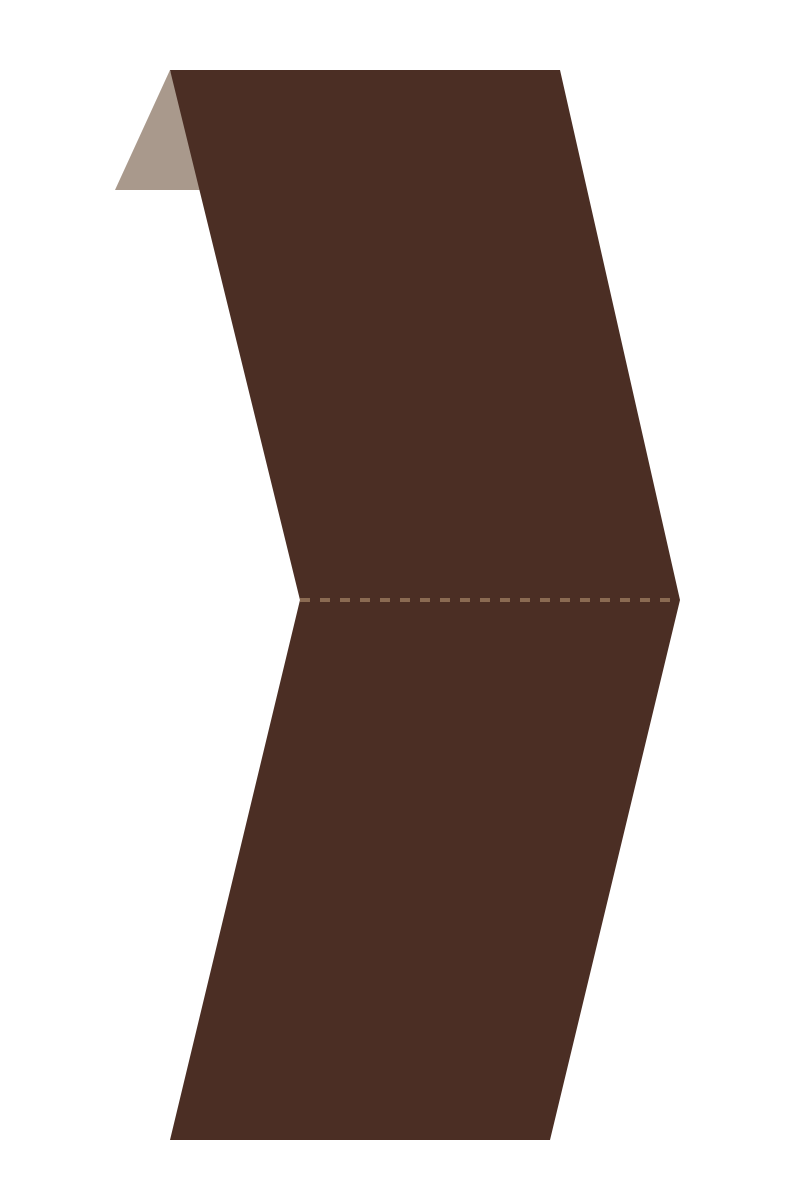 Manhattan fold
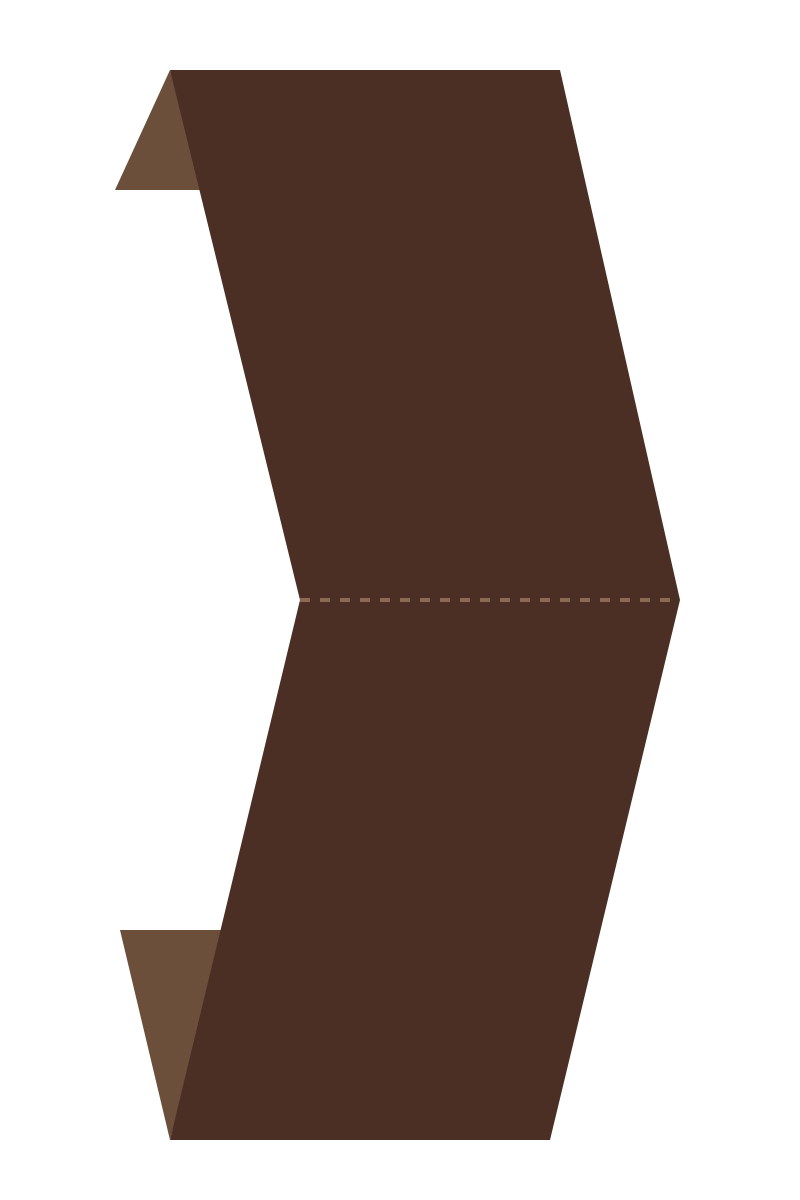 Book cover fold
The four fold types explained
Center fold — the standard for neck labels
- The label folds in half along its length. The fold becomes the top edge. Both cut ends are sewn into the seam allowance. The result is a loop in the neckline. A 2.4″ flat label becomes 1.2″ visible after folding.
- The most widely used fold type in apparel. Nearly every T-shirt, hoodie, and knitwear neck label is center fold. It installs cleanly during construction — one seam stitch catches both cut ends.
- Comfort advantage: the folded edge contacts skin. The fold creates a smooth, rounded edge at the top of the label — the part that sits in the neckline. No raw cut edges touch the wearer's skin.
- Artwork note: only the top half of the flat design is visible. After folding, the top half of the flat artwork appears on the exterior-facing side. Keep logos and brand names in the upper half of the flat design.
End fold — for surface-mounted labels
- Both short ends of the label fold back under the label face. The label lies flat with a finished edge on all four sides. Unlike center fold, end fold labels are stitched onto a surface rather than inserted into a seam.
- Stitched through both long top and bottom edges. Two parallel stitch lines secure the label. The short fold-back ends are hidden beneath the folds with no separate finishing needed.
- Common uses: hem labels, bag surface labels, retrofit branding. End fold is standard for any label applied to a finished fabric surface rather than caught in a seam during construction.
- Can be applied retroactively. Because end fold stitches onto a surface rather than requiring seam access, labels can be added to finished garments or products without unpicking seams.
Manhattan fold — premium patch finish
- All four edges fold under. The result is a fully finished rectangular label with no exposed cut edges on any side. Stitched through the center or along all four edges onto the garment surface.
- The most finished-looking label construction. The fully folded edges give the label a rigid, structured form that sits proudly on the garment surface — a design feature as much as a label.
- Used for luxury and high-end garment branding. Exterior chest labels, sleeve patches, bag face labels — wherever the label is a deliberate brand statement, not just an identifier. See the Manhattan fold labels page.
- Flexible stitching options. Full perimeter for maximum security, top-edge only for a flag-style drape, or top and bottom only for a clean presentation at larger sizes.
Book cover fold — labels that wrap an edge
- The label wraps over a garment edge or seam. The top half of the label is visible on one side of the edge; the bottom half is visible on the other. Like a book cover wrapping around the spine of a book.
- Brands both sides of an edge simultaneously. Waistbands, hem edges, bag straps, collar bands — anywhere you want consistent branding visible from both sides without two separate labels.
- Held in place by stitching through the short ends. The label straddles the edge and is secured by stitching at the top and bottom ends. The two folded faces are held flush against the fabric by this perimeter stitch.
- A distinctive, functional construction. Less common than center fold or end fold, but the right solution for any edge-wrapping label placement. See the book cover fold labels page.
Choosing fold type by placement
Neck and collar seams
- Center fold is almost always the right choice. The fold creates a comfortable loop that installs cleanly with one seam stitch. The folded edge sits in the neckline, cut ends hidden in the seam.
- For fine knitwear where bulk is a concern, flat sew-in is the alternative. A flat sew-in label lies entirely within the seam allowance — no loop standing proud into the neckline. Preferred for high-quality knitwear.
- Standard size range for center-fold neck labels: 1.8–2.2″ flat width (0.9–1.1″ visible), 0.8–1″ height.
- Never use end fold for neck seam labels. End fold is a surface-mounting construction and does not insert cleanly into a seam.
Hem, side seam, and waistband
- Hem labels: end fold is the standard. Stitched onto the interior face along the long top and bottom edges. Short folded ends are neat and hidden.
- Side seam labels: flat sew-in or center fold. Flat sew-in is preferred for slim seam allowances. Center fold creates a small visible loop in the garment interior.
- Waistband edges: book cover fold. The label wraps over the waistband top edge, visible on both interior and exterior — a clean dual-sided brand placement from a single label.
- Always check seam allowance before specifying label height for any seam-inserted label. The tab must fit within the allowance or it will show on the garment exterior.
Exterior surface mounting
- End fold for any label stitched onto a finished surface. Exterior hem labels, bag face labels, patch position branding — end fold provides a clean, flat surface application without seam access.
- Manhattan fold for premium and luxury applications. Where a fully finished rectangular label with four folded edges is the design intent — luxury fashion, premium outerwear, high-end accessories.
- Never use center fold for surface mounting. Center fold produces a loop with open cut ends — they have nowhere to hide when stitched to a finished surface. End fold is always right for surface applications.
- Book cover fold for edge-straddling placement. Bag straps, collar bands, elastic waistbands, hem edges — anywhere the label should brand both sides of an edge simultaneously.
Quick decision guide
Into a seam during construction?
→ Center fold for neck seams, collar seams. The loop inserts cleanly, cut ends hidden by the seam stitch. Works on T-shirts, hoodies, knitwear, and virtually all sewn apparel categories.
Onto a finished flat surface?
→ End fold for hem, waistband interior, bag face. Lies completely flat, stitched through long edges. Full artwork visible. No seam opening needed — applies to finished products.
Premium patch or exterior statement?
→ Manhattan fold for luxury garments, chest panels, sleeve labels, bag faces. All four edges folded under — a structured, fully enclosed patch. The most refined label construction available.
Straddling an edge or seam?
→ Book cover fold for waistband edges, bag handles, collar bands, hem edges. Wraps over the edge with branding visible on both sides — one label, two faces, clean on both sides.
- Center fold works for the vast majority of sewn apparel neck label applications
- If you are ordering neck labels for T-shirts, sweatshirts, or hoodies, center fold is correct
- Order a sample pack first if you are deciding between two fold types for a new product
- All fold types are available from 5 pieces (Proof Pack) or 50 (standard run) at the same per-label price