
Manhattan Fold Woven Labels USA
The Manhattan fold is the most finished woven label construction available. All four edges are folded under the label face — leaving a completely clean perimeter with no raw edges visible from any direction. The result is a label that looks like a small woven patch: structured, deliberate, and premium.
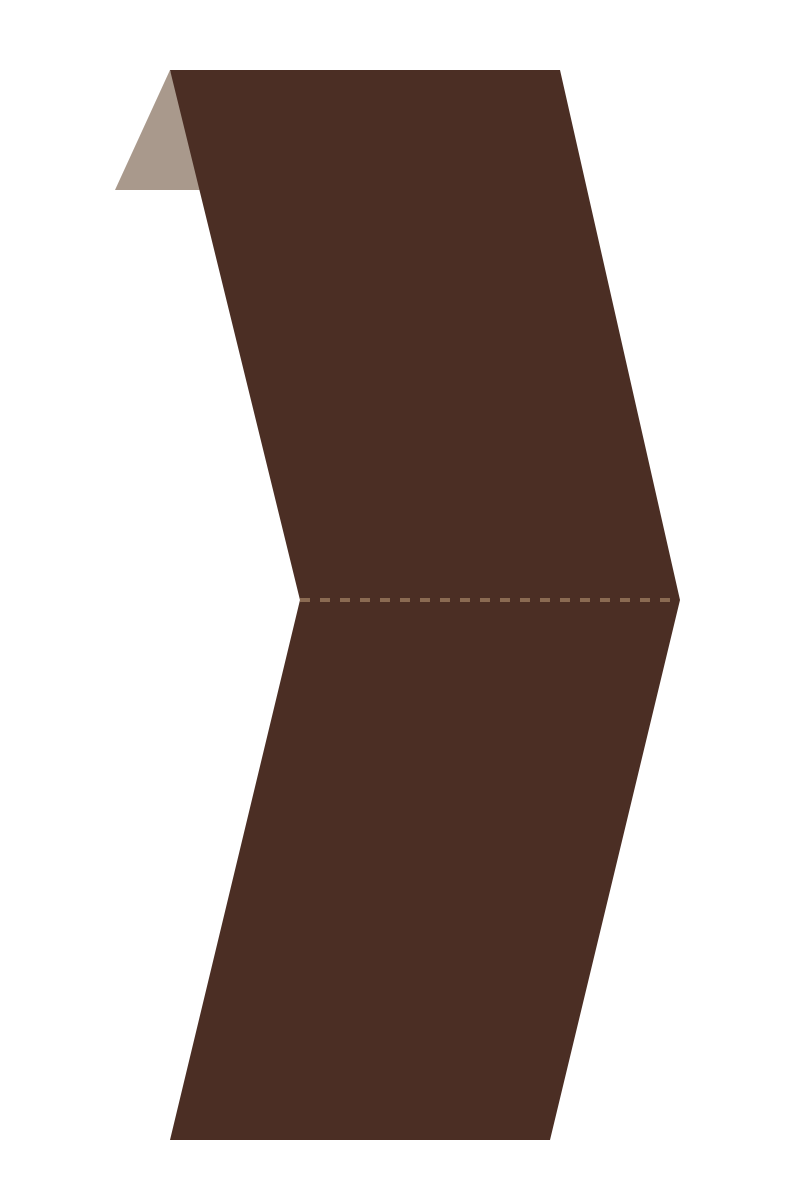
Manhattan fold labels at a glance
| Construction | All four edges folded under — a completely clean perimeter |
|---|---|
| Best for | Premium garments where no raw edge may show from any direction |
| Finish | The most finished woven label construction available |
| Weave quality | Micro-HD damask, produced under OEKO-TEX® STANDARD 100 certification |
| Pricing | Instant online configurator — no quote requests |
| Try first | $1 sample kit (USA & Canada) · woven proof of your design |
Built differently from every other fold type
How it's constructed
- All four edges folded under. Unlike end fold or center fold, Manhattan fold tucks every edge behind the label face. No cut threads, no exposed fiber — clean on all sides.
- A self-contained patch. The folded construction gives the label a slightly raised, structured quality — it sits on the fabric like a small woven tile, fully finished on every side.
- Flexible stitching options. Secure with a full perimeter stitch, top edge only (flag style), or top and bottom only. Each approach changes the visual result and drape behavior.
- No seam insertion needed. Applied to any finished fabric surface — no need to build it into a seam during construction, making it ideal for exterior placement on completed garments.
Where it's used
- Luxury and designer garments. Tailored jackets, premium knitwear, high-end outerwear — anywhere every detail is scrutinized. The label signals the same care as the construction.
- Premium streetwear and limited drops. Used to differentiate elevated pieces from the mainline. The structured perimeter reads as intentional, not incidental.
- Chest and hem patch placement. Works exceptionally well sewn onto the chest panel or hem exterior as a visible design element, not just an identifier.
- Bags, caps, and accessories. The clean perimeter reads as refined on leather, canvas, or structured materials — equally at home on a tote face or a cap crown.
Artwork and sizing
Size determines impact
2–3.2″ wide reads as a badge or patch — a deliberate design statement. 1–1.6″ reads as a refined label detail. Both work; the right choice depends on placement prominence.
Use damask for complex logos
Damask construction produces finer thread resolution, sharper type, and a softer face. The premium context of Manhattan fold demands the sharpest detail available.
Artwork sized to the visible face
Specify the finished visible dimensions when ordering. The flat production size will be slightly larger to accommodate fold allowances — you don't need to calculate this yourself.
Keep a 0.12–0.2″ perimeter margin
Leave clear margin inside all four edges of your artwork so the fold-under doesn't clip design elements, and stitch lines fall just outside the artwork area.
Manhattan fold vs other fold types
vs End fold
- Manhattan fold: All four edges under. Fully finished perimeter. Maximum premium appearance.
- End fold: Short ends only. Long edges exposed but stitched. Clean, practical, lower cost.
- End fold is the pragmatic clean finish. Manhattan fold is the deliberate premium statement.
vs Center fold
- Manhattan fold: Flat patch. Fully enclosed. For exterior placement on finished garments.
- Center fold: Loop-style into seams. The default neck label construction during production.
- For neck and in-seam labels, use center fold. For exterior chest or hem branding, Manhattan fold is the upgrade.
- The label is a visible part of the garment's exterior design
- Brand positioning is premium, luxury, or limited-edition
- Placement is exterior — chest, sleeve, hem, or bag face
- The customer will notice and appreciate the label's quality